OMS Blog: Go Beyond

Posts about:

Small Business

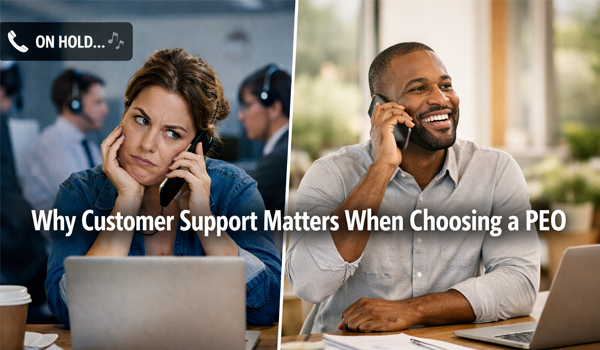
What to Look for in a PEO: Why Customer Support Matters More Than Ever

When evaluating a Professional Employer Organization (PEO) or HR outsourcing partner, most business owners focus on pricing, benefits, payroll technology, and compliance services. While those factors are important, there is another critical component that can have an even greater impact on your day-to-day experience: customer support on your toughest day.

The reality is that HR and payroll issues don't always happen during convenient times. Employees have urgent questions about benefits, payroll concerns need immediate attention, and compliance emergencies often require quick answers. When those moments arise, the quality of your PEO's customer service can make or break your small business.

Read More

1099 vs W-2 Employee: How to Classify Workers Correctly and Protect Your Business

Worker classification is one of the most important and most commonly misunderstood responsibilities for startups and growing businesses. Determining whether someone should be treated as a W-2 employee or a 1099 independent contractor impacts everything from payroll taxes to compliance risk. For employers, the distinction comes down to one fundamental question: do you control how the work is done, or just the final result? Getting this right isn’t just about following rules - it’s about protecting your business from costly penalties and ensuring a solid operational foundation.

Read More

Strategic Business Partner vs Vendor

In the fast-paced world of small business ownership, scaling up isn't just about increasing revenue; it's about smart growth that doesn't drain your time or resources. As you grow, you'll likely outsource key functions like HR, payroll, and insurance to external providers. But here's the crucial question: Are you partnering with a strategic business ally who genuinely prioritizes your success, or are you stuck with a vendor who checks boxes and collects fees?

The difference between a strategic business partner and a mere vendor can make or break your scaling efforts. A vendor delivers a product or service transactionally, offering "one-size-fits-all" solutions with minimal customization or foresight. In contrast, a strategic partner acts as an extension of your team, proactively looking out for your best interests, anticipating risks, and aligning their expertise with your long-term goals. This is especially vital for small businesses, where every decision impacts efficiency and bottom-line growth.

Read More